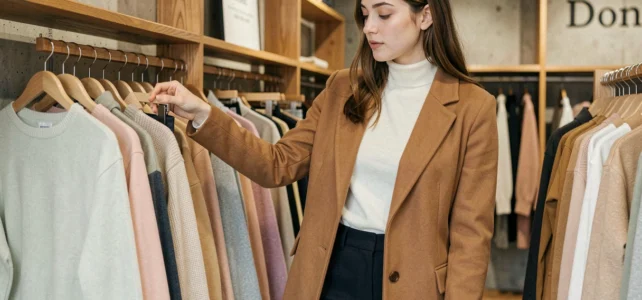
Buy less, buy better: this reflex is gaining ground in France. Sales of new clothing continue to decline, second-hand shopping is establishing itself as a legitimate purchasing channel, and the fashion trends for the fall of 2026 reflect this shift. Denim, leather, structured cuts, a sober palette enhanced with bright touches: the wardrobe is refining around durable pieces that can be mixed and matched.
Key materials trio: denim, smooth leather, and suede
Have you noticed that the same materials are appearing on all the runways this season? It’s no coincidence. Thick denim, smooth leather, and suede form the trio of materials that structure the fall 2026 wardrobe. Their common point: a durability far superior to lightweight synthetic fabrics.
Denim comes in a cut that is becoming ubiquitous: the barrel jean. Loose at the thigh, tapered at the ankle, it is gradually replacing the slim and mom jeans in wardrobes. Worn with a short jacket or an oversized sweater, it creates a balanced silhouette effortlessly.
Smooth leather, on the other hand, goes beyond just jackets to dress straight pants, midi skirts, and shirt dresses. Suede completes this trio on jackets and accessories, in shades of brown, khaki, or burgundy. These three materials share a tangible advantage at the time of purchase: they age well, justifying a higher initial price.
To spot these reasonably priced pieces, browsing the FashionUp site for your shopping allows you to compare cuts and price ranges before heading to a store.
Fall 2026 colors: sober palette and character accents
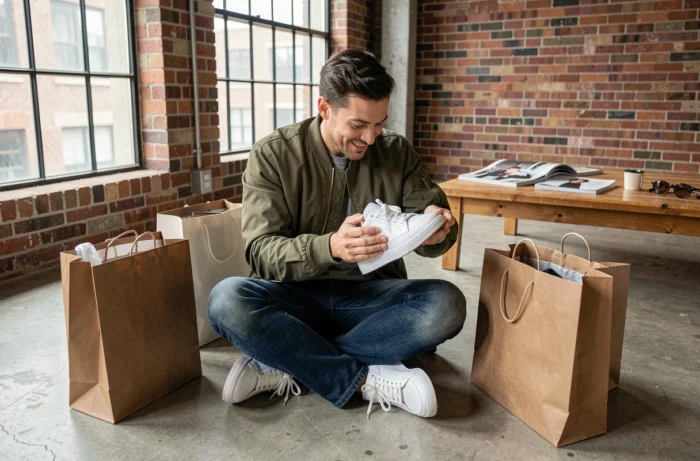
The dominant palette remains natural: khaki, olive green, gray, brown. Burgundy stands out as the signature color of the season. It appears on strong pieces (aviator jacket, structured bag, suede ankle boots) rather than on basics.
Why this choice of colors? The sober shades make combinations simpler. A beige pant can be worn with a khaki sweater on Monday, a burgundy shirt on Wednesday, and a black leather jacket on Friday. Fewer pieces, more possible combinations: this is the principle of a functional wardrobe.
The trap of ephemeral trendy colors
Each season brings a “star” shade that disappears after six months. The butter yellow of spring 2026, for example, is already on clearance. Before investing in a bright color, ask yourself a simple question: does this shade match at least three pieces you already own? If the answer is no, limit yourself to an accessory (scarf, belt) rather than a jacket or pants.
Fashion shopping and second-hand: the balance of power has shifted
In the first quarter of 2025, Vinted became the leading seller of clothing in France by transaction volume, ahead of Amazon and Kiabi. This shift is not just for small budgets. Second-hand is now attracting buyers looking for quality pieces at reduced prices, including mid-range brands.
This change alters the approach to shopping. Buying a well-maintained second-hand leather jacket often costs less than a new faux leather jacket that will peel in two seasons. The cost per wear (the price divided by the number of times you actually wear the piece) becomes a more relevant criterion than the price displayed in the window.
- Check the condition of seams, closures, and leather before buying second-hand: these are the first signs of actual wear.
- Always compare the second-hand price with the new price on sale, as the gaps narrow during sales periods.
- Prefer durable materials (thick denim, wool, genuine leather) that withstand a second life cycle better than polyester or fine viscose.
European regulation on unsold textiles: what changes in 2026
Since July 19, 2026, large companies are no longer allowed to destroy unsold new clothing, accessories, and shoes in the European Union. This ban stems from the ESPR regulation on the eco-design of sustainable products (Regulation (EU) 2024/1781).
In practice, brands must donate, recycle, or repurpose their unsold stock. This means more new pieces entering the second-hand market, into charities, or into clearance channels. For consumers, it’s an opportunity: quality products accessible outside traditional channels.
Impact on shopping habits
This regulation also encourages brands to produce less, with more streamlined collections. Brands that adjust their production mechanically reduce the rotation of trends. The result: pieces remain relevant longer in your closet, promoting thoughtful purchases rather than impulsive ones.
Building a trendy fall look with five pieces
An effective seasonal wardrobe relies on a small number of well-chosen pieces. Here’s a concrete base for fall 2026:
- A barrel jean in raw or lightly washed denim, loose enough to be worn with ankle boots or sneakers.
- A military-inspired jacket in khaki or burgundy, the standout piece that adds character to a neutral outfit.
- An oversized sweater in blended wool, in a natural tone (ecru, gray mélange, beige) that fits under the jacket.
- A pair of ankle boots with details (buckle, topstitching, chunky sole), in smooth leather or suede.
- A bright-colored accessory (bag, belt, scarf) to break the sobriety without risk.
Five pieces that generate about fifteen different outfits. The rest of the wardrobe (t-shirts, white shirts, black pants) serves as a neutral backdrop. Smart fashion shopping means renewing these key pieces once or twice a year, not filling an entire closet with every seasonal change.
The trends for this fall 2026 converge on the same observation: sustainable style and controlled budgets are no longer opposed. Solid materials, colors that transcend seasons, booming second-hand, regulations that curb textile waste. The trendy look for this autumn is built with fewer pieces, but each deserves to be worn for a long time.