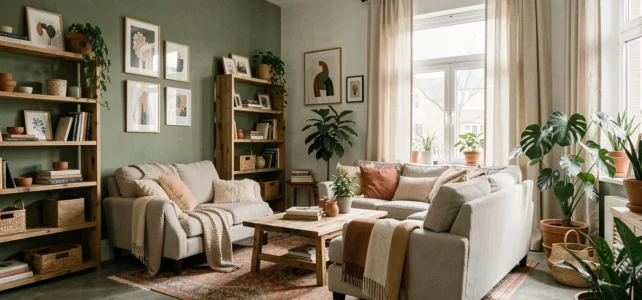
Customizing a living space is no longer just about choosing a wall color or a sofa. Recent trends show a shift towards structured emotional universes, where each technical choice (finishes, lighting, furniture) serves a coherent aesthetic stance. Here are ten concrete interventions, listed in no particular order, to transform an interior with real impact.
1. Drenching monochrome on an entire volume
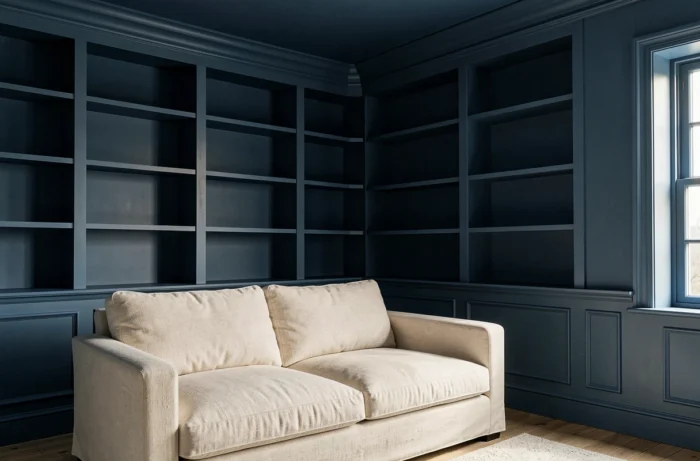
Drenching involves applying a single shade to walls, ceiling, woodwork, and sometimes radiators. This technique, validated by professional decorators, eliminates visual breaks and enlarges the perception of volume. It works particularly well in narrow passage rooms (hallways, entrances) or under eaves.
We recommend testing the shade on a complete wall before treating the entire space. A half-tone difference between matte finish (walls) and satin finish (woodwork) is enough to create relief without breaking the unity. Drenching in dark shades requires calibrated supplementary lighting; otherwise, the cave effect takes over.
To explore other complementary approaches, several innovative decor ideas on Nuxo detail color-material combinations suitable for this type of treatment.
2. Hand-painted furniture as a focal piece
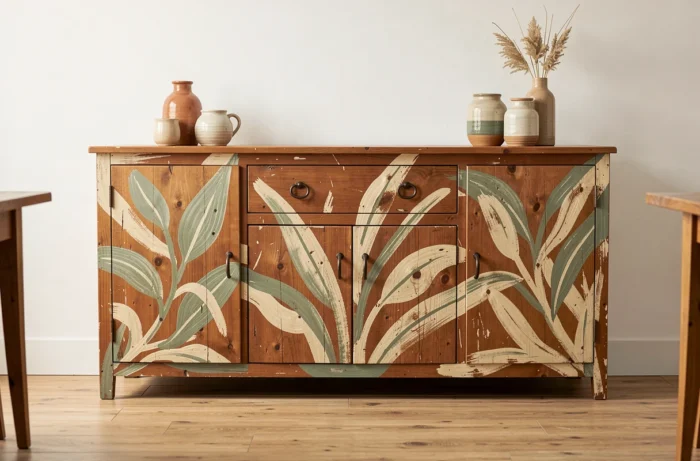
The demand for hand-painted furniture has significantly increased between 2022 and 2024. A buffet, a dresser, or a coffee table reworked by hand becomes the visual anchor of a room, provided it remains the only strong piece in the volume.
The technical interest lies in the choice of the substrate. Solid woods (oak, walnut) accept mineral paints better than melamine panels, which require a specific primer. Sanding with 120 then 180 grit before application ensures lasting adhesion without chipping.
3. Slatted screen to modulate without partitioning
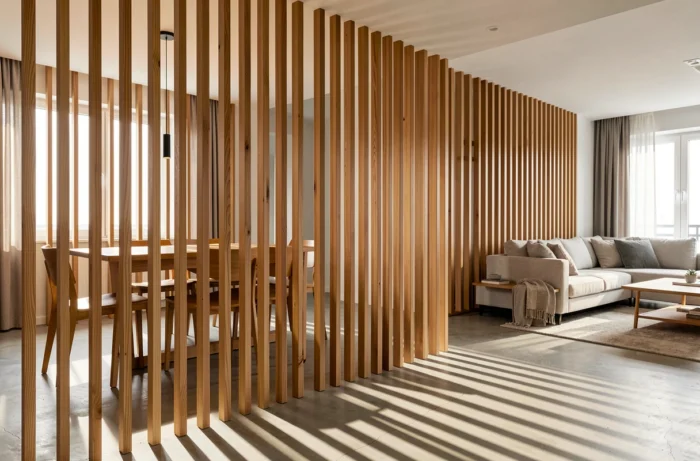
The vertical slatted screen (common section of 27 x 27 mm, spacing of 40 to 60 mm) allows zoning an open space without sacrificing light or air circulation. Fixed between floor and ceiling, it delineates a work corner, an entrance, or a sleeping area in a studio.
Raw pine remains the most accessible material, but oak or beech age better without treatment. We observe that spacings less than 40 mm create an effect that is too opaque, while beyond 70 mm, the visual separation becomes symbolic.
4. Layered lighting
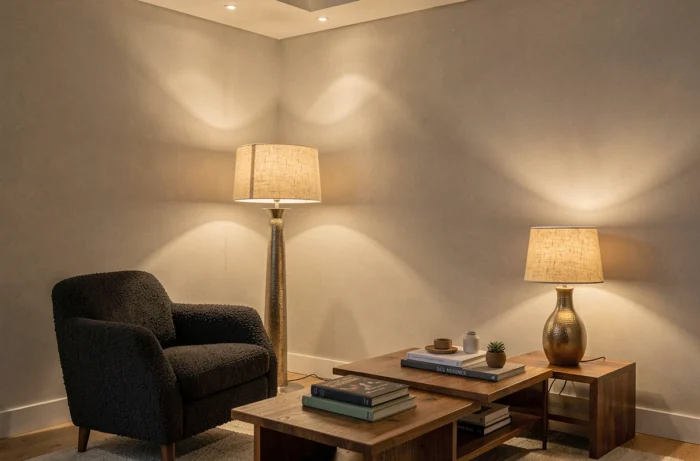
Three levels of lighting radically transform the atmosphere of a room: general light (ceiling fixture or track), functional light (reading lamp, worktop spot), and ambient light (indirect LED strip, table lamp). Most interiors only utilize one level, resulting in a flat atmosphere.
The color temperature makes a difference. For a living room, a mix of sources between 2,700 K and 3,000 K creates a coherent warmth. Placing LED strips behind a groove or under a low piece of furniture avoids direct glare and produces a visual floating effect on the furniture.
5. Dedicated relaxation corner with low seating
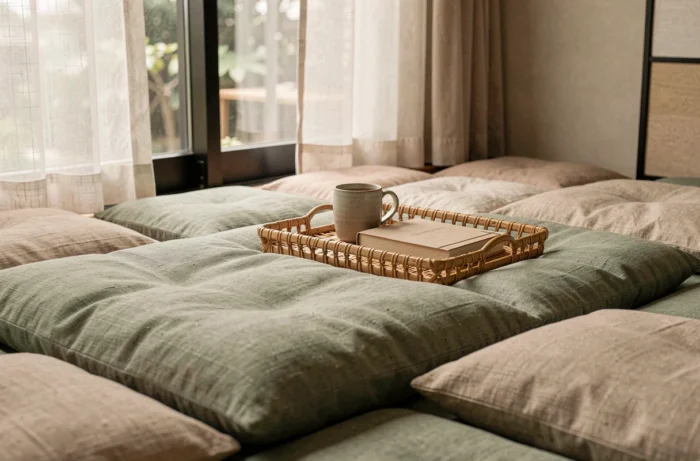
Creating a micro-zone for rest in an underutilized corner (nook, bow window, end of hallway) adds functionality absent from classic layouts. A low armchair, two floor cushions, and a light source are sufficient.
The often-overlooked technical point is the seat height. Below 35 cm, getting up becomes difficult for users over 60. Providing a side support (armrest or side table) solves the problem without compromising the low aesthetic.
6. Vertical greening indoors
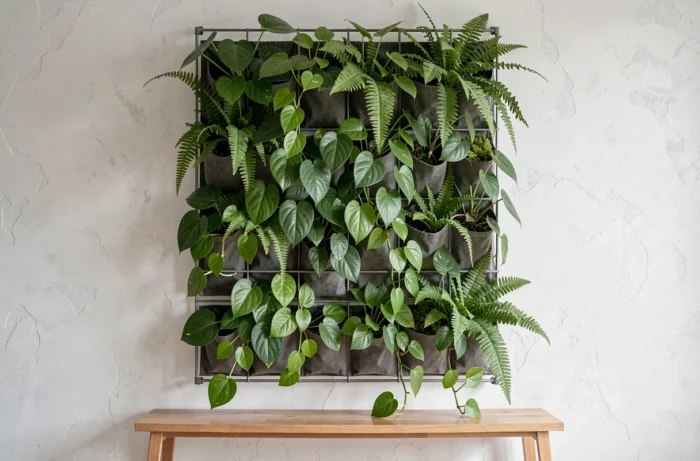
The stabilized plant wall (moss, lichen, preserved foliage) requires no watering or direct light. For a living wall, pocket systems in geotextile felt with integrated micro-irrigation remain the most reliable for residential use.
Trailing plants (pothos, tradescantia, chlorophytum) adapt better to indoor walls than upright species, which require more light. We recommend limiting the vegetated area to a single wall to avoid excess ambient humidity in poorly ventilated homes.
7. Mixed flooring to visually zone
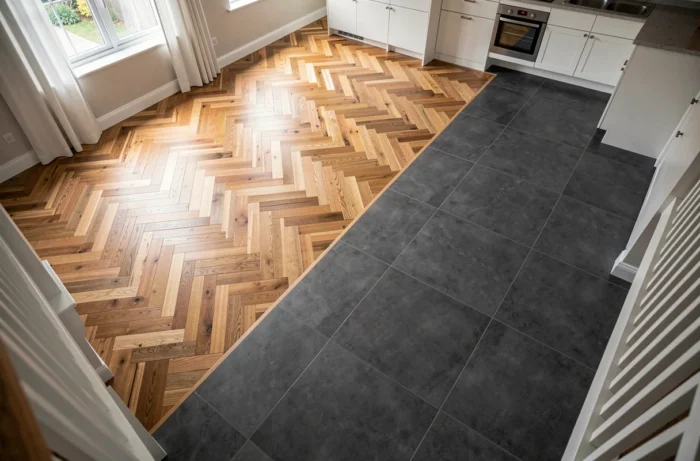
Combining two floor coverings (tiles and parquet, polished concrete and vinyl) in an open room creates functional delineation without partitioning. The junction between the two materials becomes a design element in its own right.
The difficulty lies in treating the expansion joint. A transition profile in brushed brass or aluminum ensures a clean finish. Irregular cuts (hexagons that bite into the parquet) require precise layout to the millimeter, ideally done before laying the first material.
8. Heavy textiles at windows for acoustics
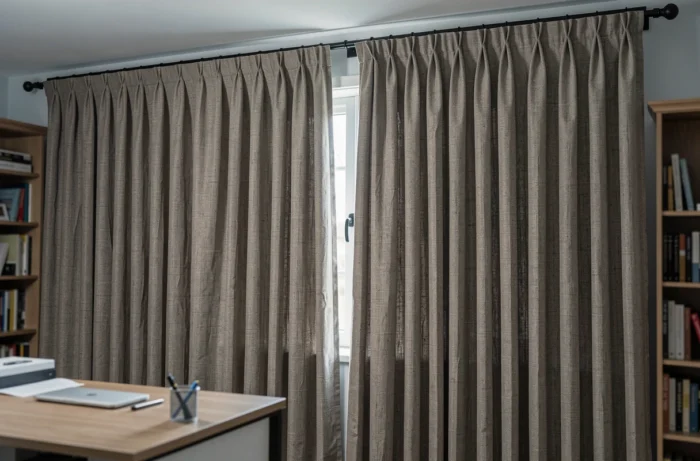
A thick linen or velvet curtain, fixed to the ceiling rather than above the window, visually elongates the wall and absorbs a significant portion of sound reverberations. In modern homes with hard floors and smooth walls, this textile addition corrects a common acoustic flaw.
The rail embedded in a hidden track produces a cleaner look than an exposed rod. The fabric should touch the floor with an excess of two to three centimeters for an elegant break effect.
9. Raw material countertop for the open kitchen
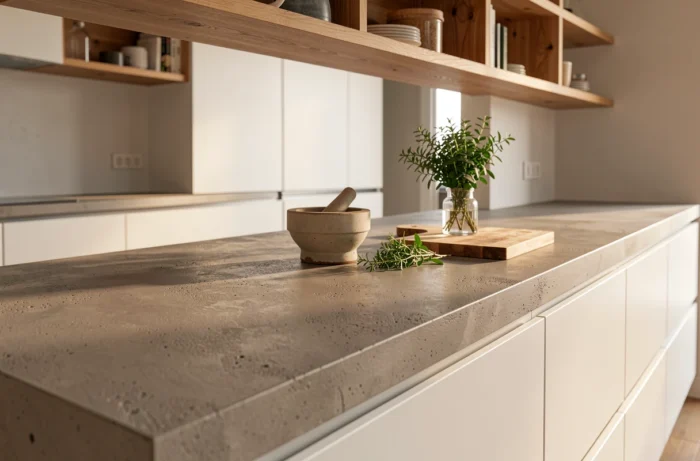
In an open kitchen, the countertop is visible from the living room. A raw material (oiled solid oak, unpolished natural stone, polished concrete) anchors the kitchen in a artisanal register that contrasts with standard laminated surfaces.
Solid oak requires a hard oil applied in two coats, renewed annually on cutting areas. Unsealed natural stone stains upon contact with acids (lemon, vinegar), necessitating an initial waterproofing treatment and quarterly maintenance.
10. Evolving wall gallery on a picture rail
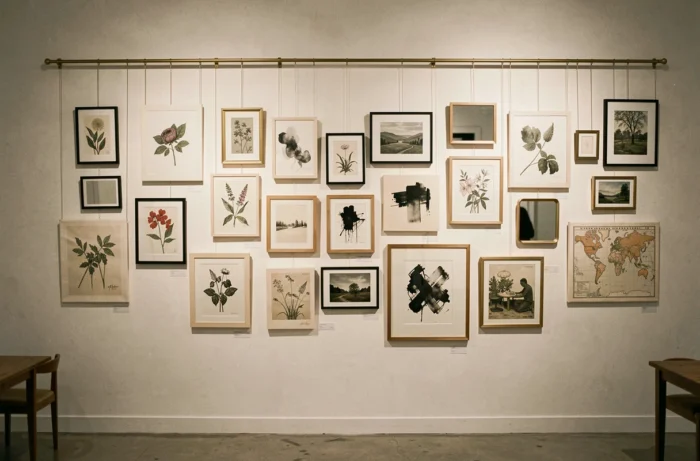
The picture rail (a rail fixed at the top of the wall) allows for hanging, moving, and recomposing a display without drilling new holes. This system, common in art galleries, adapts perfectly for home use to showcase photos, illustrations, or framed objects.
- Load capacity per hook typically ranges from five to fifteen kilograms depending on the rail
- Height adjustment by cable or rod, changeable in seconds
- Compatible with all types of frames, including unstretched canvas frames
The picture rail eliminates the recurring problem of multiple holes left by nails, particularly burdensome in rental properties. A single well-placed rail replaces dozens of spot fixings throughout the duration of occupancy.
Each intervention listed here targets a specific lever (light, acoustics, zoning, material) rather than a generic decorative effect. The sustainable transformation of a living space relies on these deliberate technical choices, adapted to the volume and actual use of the dwelling.