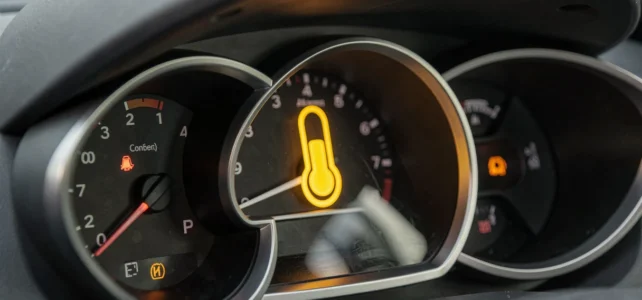
The drop-shaped warning light above a basin on the dashboard of the Renault Clio 3 indicates a problem related to the braking hydraulic circuit. This pictogram has nothing to do with engine oil changes or coolant, contrary to what many drivers assume when they see it for the first time.
Clio 3 Braking Circuit: What the Pictogram Really Represents
The stylized drawing of a drop falling into a container corresponds to the brake fluid reservoir. On the Clio 3, this warning light turns red or orange depending on the severity of the signal detected by the level sensor located on the brake fluid reservoir in the engine compartment.
When this indicator appears, it means that the brake fluid level has dropped below the minimum threshold. The hydraulic system that transmits the pressure from the pedal to the brake calipers operates in a closed circuit. Normally, the fluid does not disappear. If the level drops, two main causes can be clearly distinguished.
To better understand the drop basin warning light on Clio 3, one must first identify which of these two causes is at play before getting behind the wheel.
Brake Pad Wear or Hydraulic Leak: Distinguishing the Two Causes

The first cause, and the most common, is not due to a leak. When the brake pads wear, the pistons of the calipers move further forward to compensate for the lost thickness. The brake fluid then fills the space freed up in the calipers, which mechanically lowers the level in the reservoir. The light comes on without a single drop having left the circuit.
The second cause is a real leak in the hydraulic circuit. A cracked brake line, a corroded fitting, or a faulty caliper seal allows fluid to escape. This situation is more serious, as it directly reduces the pressure available for braking.
To differentiate, a visual inspection of the brake fluid reservoir remains the first reflex. The translucent reservoir has MIN and MAX markers. Three clues guide the diagnosis:
- The level is slightly below the MIN marker, with no visible signs of leakage around the reservoir or under the car: brake pad wear is the most likely hypothesis.
- Wet or greasy marks appear on a line, a caliper, or on the ground under a wheel: a leak is active, and the vehicle should not be driven.
- The level has dropped very quickly after a recent top-up: the leak is confirmed, even if it is not yet visible to the naked eye.
Drop Basin Warning Light On: Immediate Actions to Take
One point highlighted by recent mechanical recommendations deserves emphasis: this warning light requires a stop as soon as possible. The braking circuit is a primary safety component. Driving with insufficient fluid levels can lead to partial or total brake loss, with no warning signs other than this light.
If the light comes on while driving, the procedure to follow is straightforward. Gradually slow down, park safely, turn off the engine. Open the hood and locate the brake fluid reservoir, located on the driver’s side near the master cylinder.
If the level is low but no leak is visible, topping up with appropriately specified brake fluid allows for a trip to a workshop. The journey should remain short and at reduced speed. If a leak is identified, the vehicle must not return to the road: a breakdown service is necessary.

Brake Fluid Maintenance on Clio 3: A Often Neglected Point
Brake fluid is hygroscopic, meaning it absorbs moisture from the air over time. This accumulated water in the circuit lowers the boiling point of the fluid. During heavy braking, degraded fluid can create vapor bubbles in the lines, resulting in a soft pedal and loss of effectiveness.
Renault recommends periodic replacement of the brake fluid. On the Clio 3, this interval is generally around two years, but many owners overlook this operation as long as no warning light comes on. The problem is that the degradation of the fluid does not trigger the drop basin light: only the level does.
Bleeding the braking circuit involves removing the old fluid and any air bubbles, then refilling with new fluid. This operation requires two people (one to pump the pedal, one to open the bleeders on each caliper) or a pressure bleeding device.
Clio 3 Brake Light: When the Sensor Itself is the Issue
In some cases, the reservoir level sensor malfunctions and turns on the light when the fluid level is correct. This sensor operates with a magnetic float. Corrosion, contamination of the reservoir, or an oxidized connector can generate a false signal.
Before concluding that a sensor is defective, one must check the actual level, inspect the circuit to rule out a leak, and then check the electrical continuity of the sensor. Replacing a level sensor is inexpensive and can be done in a few minutes, but this cause should only be considered after eliminating real mechanical issues.
An OBD diagnostic allows reading the fault codes associated with the braking system and confirming or ruling out an electrical malfunction of the sensor.
The drop basin warning light on the Clio 3 remains one of the most misidentified indicators by drivers, often confused with an oil change reminder. Checking the brake fluid reservoir takes less than a minute with the hood open. It is the first action, and often the only one needed to determine whether the situation requires a simple pad replacement or a more urgent intervention.