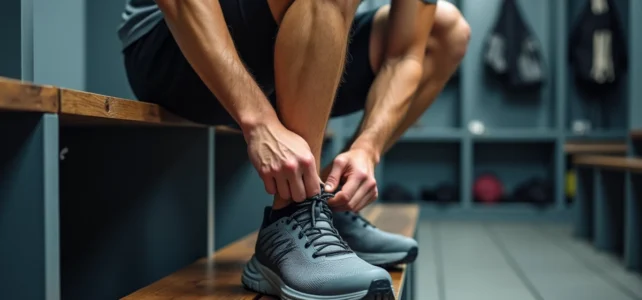
Choosing sports equipment is not just a matter of brand or budget. The gear worn or used during exercise affects the quality of support, the body’s thermal regulation, and injury prevention. Whether the practice is focused on weightlifting, cycling, fitness, or team sports, each discipline imposes specific mechanical and physiological constraints that the equipment must meet.
The practice surface, a sports equipment often overlooked
Buying guides focus on what the athlete wears: shoes, clothing, accessories. They overlook a crucial factor: the surface on which one practices is itself equipment. The hardness of the ground, grip, uniformity of the surface, and water drainage capacity directly influence the stability of support, impact cushioning, and risk of injury (sprains, falls, joint shocks).
A well-maintained synthetic field can have its lifespan doubled compared to a neglected surface. For club and community managers, rigorous maintenance of fields is now considered a safety obligation. An athlete who invests in high-end shoes but trains on a degraded surface significantly reduces the benefits of their equipment.
Before replacing running shoes or cleats, checking the condition of the usual practice surface provides a reliable indication of the source of certain recurring pains. Comparing product sheets for shoes while also selecting equipment based on the criteria offered on the equipment from the site Va Y Avoir Du Sport allows for cross-referencing needs related to the ground and the worn equipment.

Sports shoes: what the choice of sole really changes
The shoe remains the primary investment for most disciplines. However, not all so-called “sports” shoes are created equal, and the decisive criterion is neither weight nor design: it is the sole.
In running, an unsuitable sole for the gait (pronated, supinated, or neutral) generates asymmetric stresses on the knee and ankle joints. In weightlifting, the trend is towards shoes with a flat and rigid sole, which guarantee direct force transfer to the ground during squat or deadlift movements. For cycling, the rigidity of the sole determines pedaling efficiency.
Each discipline requires a different sole architecture. Using a running shoe in a fitness room creates excessive cushioning that destabilizes support during strengthening exercises. Conversely, wearing indoor shoes on a trail exposes one to slips due to inadequate cleats.
Concrete criteria for choosing shoes
- The type of surface (road, trail, wood floor, grass) dictates the profile of the outsole: smooth for indoors, rugged for trails, cleated for muddy terrains
- The gait and foot morphology guide the choice between neutral support, pronation correction, or minimalist models
- The frequency of practice determines the necessary durability: a regular runner wears out a pair significantly faster than an occasional practitioner
Technical clothing and thermal comfort during sports activity
Sports clothing is not just for covering the body. Its primary function is moisture and temperature management during exertion. A fabric that retains sweat increases the sensation of cold when at rest and promotes skin irritation during movement.
Breathable synthetic fibers wick sweat away from the textile’s surface, keeping the skin relatively dry. In recent years, manufacturers have increasingly integrated recycled materials and bio-based fibers into the design of technical clothing, without compromising thermal performance. This trend towards sustainability is gradually changing selection criteria: a practitioner can now choose high-performance equipment with a low environmental impact.
For outdoor sports (cycling, running, hiking), the three-layer system remains a reference: a breathable layer close to the body, an insulating intermediate layer, and a protective outer layer against wind and rain. In a weightlifting or fitness room, a fitted and lightweight garment is sufficient, provided it does not hinder the range of motion.

Protective accessories and recovery equipment
Some disciplines require standardized protections: helmets in cycling, shin guards in football, knee pads in volleyball. These protections are not optional but essential for safety. A properly fitted helmet absorbs a significant portion of the energy from an impact, while a helmet that is too large or poorly secured loses most of its effectiveness.
Beyond the protections worn during exertion, recovery equipment is gaining importance in regular sports practice. Massage rollers, resistance bands, percussion guns: these accessories are used after sessions to reduce muscle tension and promote blood circulation.
- A foam roller applied to the engaged muscle groups helps release the fascia after a weightlifting or running session
- Resistance bands are used for both warm-up and active recovery, mobilizing joints without heavy loads
- Compression socks, worn after activity, facilitate venous return, particularly useful after prolonged exertion like cycling or long-distance running
Adapting equipment to training frequency
An athlete who trains twice a week does not have the same needs as a daily practitioner. The training frequency determines the level of equipment necessary. Investing in advanced recovery equipment only makes sense if the training volume justifies it. For moderate practice, a simple massage roller and regular stretching cover the essential needs.
The renewal of equipment follows the same logic. Running shoes used daily lose their cushioning properties much faster than those worn once a week. Monitoring the wear of the sole and the integrity of the heel counter provides a reliable indicator of when replacement is necessary, before joint pain demands it.