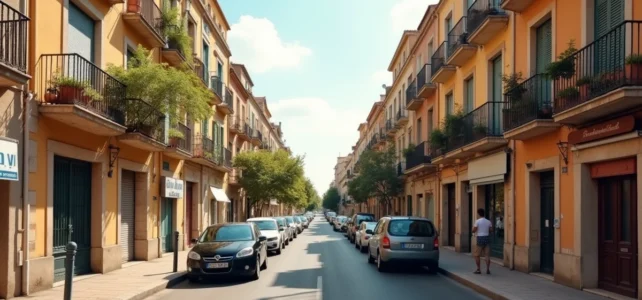
La Rose concentrates a portion of the transit flows from the northeast of Marseille, with a multimodal exchange hub (metro, bus, park-and-ride) that generates heavy traffic during extended hours. This particular configuration directly influences the crime profile of the area, distinct from that of the residential neighborhoods in the rest of the 9th arrondissement.
Burglaries in the 9th arrondissement: a documented departmental trend
During a meeting of the Departmental Council for Crime Prevention, state services pointed out a rise in burglaries in the 9th arrondissement compared to other areas of the department. This institutional data deserves to be compared with the ground reality, as the distribution of incidents varies greatly from one neighborhood to another within the same arrondissement.
We observe that this increase mainly affects residential areas and condominium complexes, where the urban fabric offers discreet access. The sectors near La Rose, with their alleys and residential dead ends, present a vulnerable profile for this type of crime.
To delve deeper into security in La Rose and the 9th arrondissement of Marseille, it is essential to distinguish property crime (burglaries, vehicle thefts) from public space crime, which does not follow the same geographical dynamics.
The La Rose neighborhood itself is located at the junction between condominiums from the 1960s-1970s and more recent developments. This heterogeneity in construction creates disparities in security measures from one block to another: malfunctioning intercoms in some residences, lack of fencing on other lots.

La Rose Exchange Hub: transport security and flow-related crime
The multimodal hub of La Rose constitutes the main security tension point in the area. The metro station, the terminus of line 1, daily attracts a volume of passengers that far exceeds the resident population of the neighborhood. This flow creates an environment conducive to pickpocketing and incivilities, concentrated during peak hours.
The recent intensification of road checks and patrols in residential and transit areas specifically targets the entrances and exits of the La Rose neighborhood. These operations focus on traffic routes that serve both commuting and urban rodeos reported by residents in several recent testimonies.
Motorized rodeos, documented by reports from France 3 Provence-Alpes, constitute a recurring nuisance in the eastern sector of Marseille. They affect the perception of safety well beyond their direct danger, creating a sense of impunity in public spaces.
Reporting zones and critical hours
Flow-related crime does not distribute uniformly. We recommend distinguishing three time frames:
- Peak hours (7 AM-9 AM, 5 PM-7 PM), where the density of metro and bus stop traffic paradoxically limits certain types of assaults due to natural surveillance
- The 9 PM-11 PM window, during which the decrease in traffic at the exchange hub reduces this passive surveillance and concentrates incidents of violent theft
- Daytime on weekends, when motorized rodeos and noise nuisances take over as the main source of perceived insecurity
Residential security in La Rose: what the buildings reveal
The typology of the real estate stock determines the level of exposure to burglaries more reliably than the raw location within the 9th arrondissement. The condominiums built before the 1980s, numerous around La Rose, exhibit identifiable vulnerability characteristics.
Underground parking with unsecured access, entrance halls without functional access control, balconies accessible from public roads: these structural defects are not found in more recent real estate developments in the Mazargues or Vaufrèges sectors, which partly explains the disparities in crime rates within the same arrondissement.
Degraded condominiums and the threshold effect
Some residences in La Rose have crossed a threshold of degradation that accelerates security issues. When an intercom has not worked for several months, when the lighting in common areas remains out of order, the probability of intrusion mechanically increases. This phenomenon, well-known to condominium managers, distinguishes La Rose from neighborhoods like Le Cabot or Le Redon, where the single-family home fabric and better-maintained condominiums offer superior passive resistance.

Comparison with other neighborhoods in the 9th arrondissement of Marseille
The 9th arrondissement encompasses very disparate security realities. Online reviews from residents reflect significant perception gaps from one neighborhood to another, which overall averages tend to obscure.
- Mazargues and Le Redon benefit from the proximity of the Luminy campus and the Calanques National Park, with a calm residential profile and crime limited to vehicle thefts in hiking parking lots
- The Baumettes and Vaufrèges, more peripheral, display a higher level of tranquility, linked to their low density and limited road access
- La Rose and its immediate surroundings concentrate issues related to transport flow, aging condominiums, and proximity to northeastern neighborhoods, with more diverse crime
- Le Cabot occupies an intermediate position, with an active commercial fabric that generates foot traffic but also a form of natural social regulation
This internal mapping of the 9th arrondissement explains why resident opinions diverge so much: a resident of Sormiou and a resident of La Rose do not experience the same security reality at all, even though they share the same arrondissement code.
La Rose remains a functional neighborhood, well-served, with real estate prices reflecting this duality between accessibility and occasional tensions. For an investor or future resident, the analysis is done at the street and condominium level, not at the arrondissement level. The state of access control, the functioning of the condominium, and the lighting of the surroundings remain the most reliable indicators for assessing the real security of an address in La Rose.