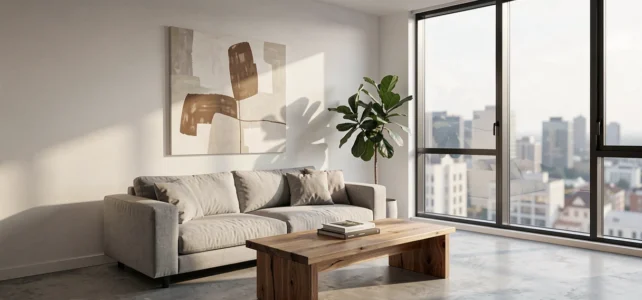
What concrete levers distinguish a coherently modernized interior from a mere accumulation of trends? Between the choice of metallic finishes, the color palette, and the type of wood used for furniture, the decisions are not all equal. This article compares the options that truly transform a modern living space, supported by recent data.
Brass vs. chrome, brown wood vs. blonde wood: what designers prefer in 2026
The choices of finishes and materials shape the identity of an interior far more than the arrangement of furniture. A survey published in 2026 among designers reveals two clear shifts in professional preferences.
| Criteria | Dominant option 2026 | Declining option | Designers’ preference |
|---|---|---|---|
| Metal finishes (sconces, handles, legs) | Brass | Chrome | 79% choose brass |
| Wood species for furniture | Brown wood (walnut, smoked oak) | Blonde wood (light oak, ash) | 76% favor brown wood |
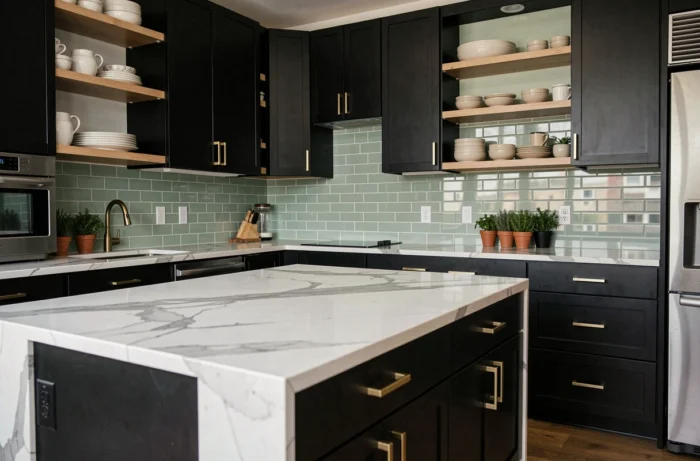
Brass brings a warm golden hue that works well on both a living room light fixture and a kitchen handle. Chrome, long associated with contemporary design, is declining because it cools the now-dominant warm neutral palettes.
For wood, the shift towards brown tones is explained by their ability to visually anchor a space. A walnut or smoked oak piece creates a natural focal point in a light room, whereas blonde wood tends to blend in without creating contrast. Resources like homedream.fr allow for exploring these material-color combinations for a coherent interior design project.
Modern interior color palette: warm neutrals and Pantone color 2026
The Pantone Color of the Year 2026, Cloud Dancer (11-4201), confirms a shift that has been underway for several seasons. This soft white, neither cold nor bright, serves as a luminous base for the living room, bedroom, or dining room.
Pure whites and cool grays are declining. Several trend analyses for 2026 converge on a finding: warm neutrals (beige, sand, greige, ivory) are replacing bright white backgrounds in modern interiors.
Deep colors to structure the rooms
Cloud Dancer does not work alone. Designers pair it with deep colors that structure the space without darkening it:
- Terracotta and chocolate browns for accent walls in the living room or entryway, which immediately warm the atmosphere
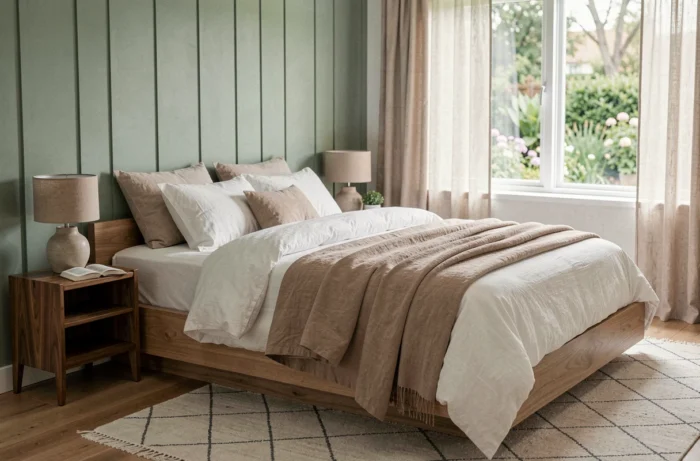
- Olive and sage greens for the bedroom or bathroom, creating a visual connection with the natural materials of the furniture
- Navy blue in small doses (niche, alcove, back of a bookshelf) to add depth without overwhelming the volume of the room
The combination of a warm neutral base and a deep accent shade replaces the all-white look that has dominated apartment decor in recent years. This principle works regardless of size: a studio gains character with just one sage green wall, while a large living room can absorb an entire terracotta wall.
Living room and bedroom decor: raw textures vs. smooth surfaces
The 2026 trend is not limited to color. The treatment of surfaces plays a comparable role in the perception of a modern space. Cold minimalism, with its lacquered surfaces and stripped-down lines, gives way to what several sources describe as a “contemplative” approach blending mineral and wood.
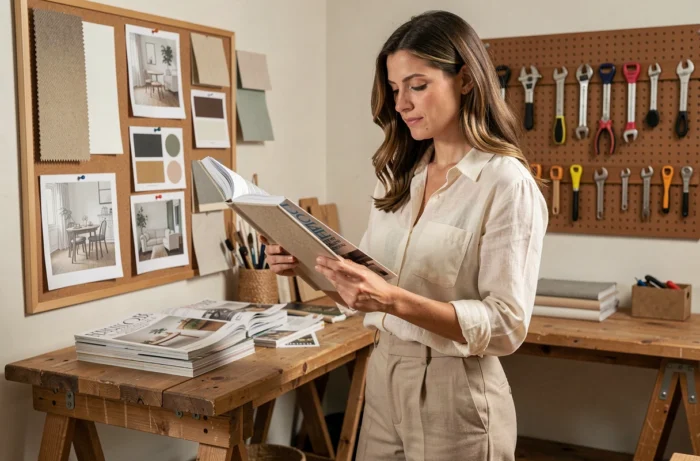
In practical terms, this translates to choices of coverings and accessories that prioritize visible material. A lime plaster on a living room wall, a natural unpolished stone tabletop, a textured wallpaper in a bedroom: each surface becomes a design element in its own right.
Practical balancing between living spaces and rest areas
The dosage of raw textures varies according to the function of the room. In a living room or open kitchen, durable materials (stone, polished concrete, solid wood) withstand daily use while adding character. In a bedroom, soft textures take over: wrinkled linen, boucle wool, corduroy on cushions or the headboard.
Mixing two to three textures per room is enough to create visual richness. Beyond that, the space becomes cluttered. A boucle fabric sofa placed on a jute rug, facing a matte plaster wall, already covers three distinct tactile registers.
Decor ideas room by room: where to concentrate the budget for visible results
Not all rooms respond the same way to a decor investment. The visual return from changing a light fixture in a narrow entryway exceeds that of an identical fixture in a large, already furnished living room.
- The entryway and hallway benefit the most from textured wallpaper or a brass sconce, as these passage spaces are seen daily without being truly decorated
- The living room absorbs investments in furniture (sofa, brown wood coffee table) but requires an accent wall or rethought lighting for the change to be noticeable
- The bedroom gains atmosphere with bedding in natural materials and indirect lighting, for a moderate budget
- The kitchen and bathroom offer the best transformation/cost ratio simply by replacing handles and faucets (switching to brass, for example)
Replacing the handles and faucets in a kitchen costs a fraction of a complete renovation and yet changes the entire perception of the room. This is the type of decision that classic decor idea lists rarely mention, as it seems too modest.
The transformation of an interior into a modern space relies less on the number of interventions than on the coherence between three parameters: the color palette, the choice of metallic finishes, and the range of textures. The 2026 data on designers’ preferences show that brass, brown wood, and warm neutrals form a reliable foundation for a sustainable decor project, from the living room to the bathroom.